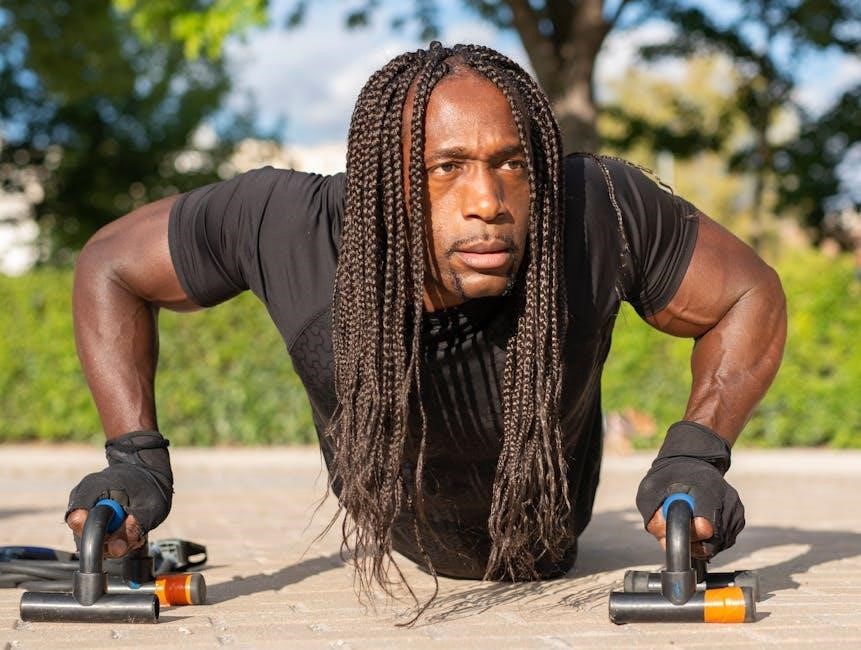
Push/pull/legs (PPL) is a popular, effective split for building muscle and strength, perfect for all levels, utilizing a 3-day weekly routine.
What is a Push Pull Legs Split?
A Push Pull Legs (PPL) split organizes workouts by movement patterns. “Push” focuses on chest, shoulders, and triceps – muscles used for pushing motions. “Pull” targets the back, biceps, and rear deltoids, engaging muscles for pulling. “Legs” concentrates on quadriceps, hamstrings, and calves.
This 3-day structure allows focused muscle group training with adequate recovery. It’s a highly effective method for gaining muscle mass, strength, and balanced development, suitable for both beginners and experienced lifters.
Benefits of a PPL Routine
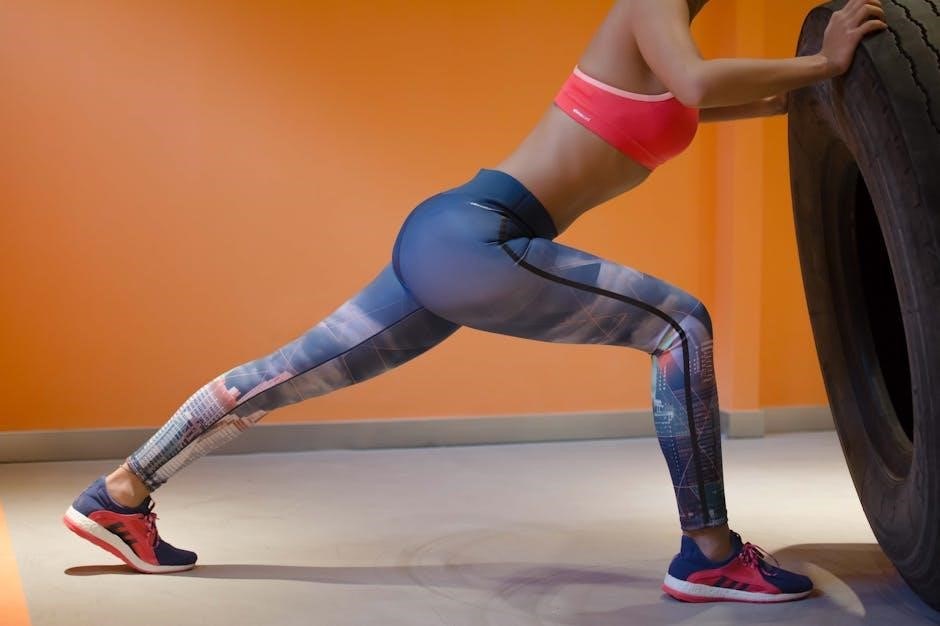
A Push Pull Legs routine offers several advantages. It allows for hitting each muscle group once weekly, promoting consistent stimulus for growth. The split facilitates focused workouts, maximizing intensity and efficiency.
This approach also enables better recovery, as muscle groups aren’t worked on consecutive days. PPL is adaptable for beginners and advanced lifters, supporting progressive overload and balanced physique development, making it a versatile and effective training method.
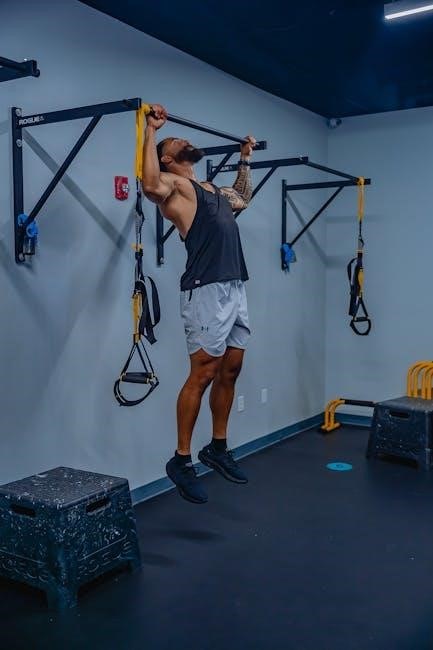
Day 1: Push Workout
The first day focuses on “pushing” movements, targeting chest, shoulders, and triceps for comprehensive upper body strength and muscle development.
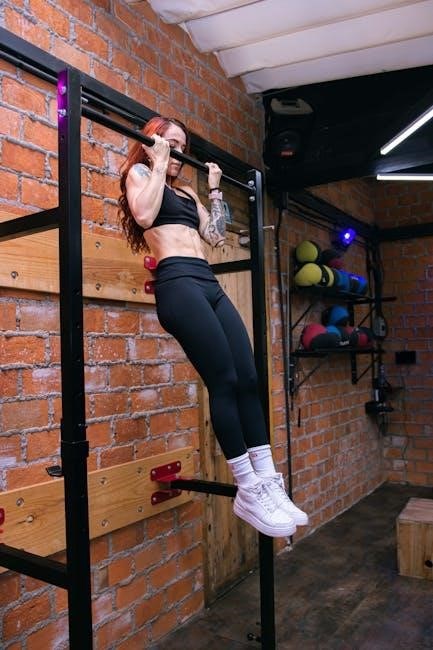
Chest Exercises
Developing a strong chest is fundamental to the push day. Prioritize compound movements like various bench press variations to build overall mass and strength. Incorporate incline dumbbell presses to target the upper chest for a well-rounded physique. Remember to focus on proper form and controlled movements throughout each exercise. These exercises are crucial for building a powerful and aesthetically pleasing upper body, forming the foundation of your push workout. Progressive overload is key for continued gains.
Bench Press Variations
Mastering bench press variations is essential for comprehensive chest development. Explore flat bench press for overall strength, incline bench press to emphasize the upper chest, and decline bench press to target the lower portion. Utilizing different angles and grips stimulates muscle fibers differently, promoting balanced growth. Don’t neglect barbell and dumbbell options; each offers unique benefits. Proper form is paramount to prevent injury and maximize effectiveness. Varying these techniques prevents plateaus and ensures continuous progress.
Incline Dumbbell Press
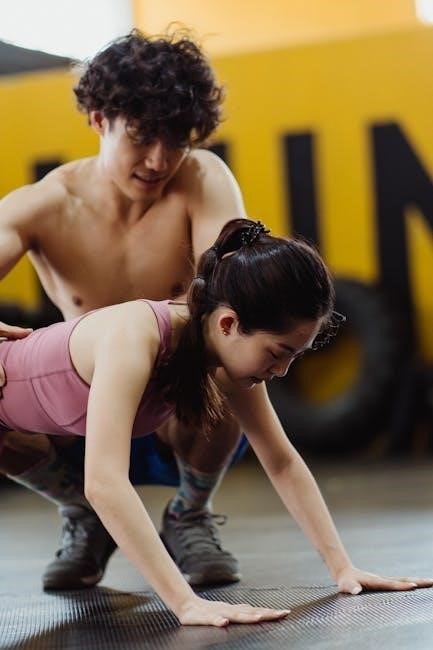
The incline dumbbell press is a fantastic exercise for developing the upper pectoral muscles. Dumbbells allow for a greater range of motion and can help correct muscle imbalances compared to a barbell. Focus on controlled movements, squeezing the chest at the peak contraction. Adjust the incline angle to target different areas of the upper chest. Prioritize proper form over lifting heavy weight to avoid shoulder strain and maximize muscle activation. This variation builds a fuller, more defined chest.
Shoulder Exercises
Strong, well-developed shoulders contribute significantly to an aesthetic physique and overall upper body strength. Shoulder exercises should focus on all three deltoid heads – anterior, medial, and posterior. Incorporating both compound movements like the overhead press and isolation exercises like lateral raises is crucial for balanced development. Prioritize controlled movements and proper form to prevent injury. Remember to progressively overload by increasing weight or reps over time for continued gains.
Overhead Press
The overhead press is a foundational compound exercise for shoulder development, building strength and mass in the deltoids and upper trapezius. Perform this exercise standing or seated, maintaining a stable core and controlled descent. Focus on pushing the weight directly overhead, fully extending your arms without locking your elbows; Aim for 3-4 sets of 6-12 repetitions, progressively increasing the weight as you get stronger. Proper form is paramount to avoid shoulder impingement.
Lateral Raises
Lateral raises effectively target the medial deltoid, contributing to broader shoulders and an improved physique. Using dumbbells, maintain a slight bend in your elbows and raise your arms out to the sides until parallel to the floor. Control the movement throughout, avoiding momentum. Focus on feeling the contraction in your shoulder muscles. Perform 3-4 sets of 12-15 repetitions. Prioritize proper form over heavy weight to maximize muscle activation and minimize injury risk.
Triceps Exercises
Strong triceps are crucial for pushing movements and overall arm development. Effective exercises include close-grip bench press, focusing on keeping elbows tucked, and triceps pushdowns, utilizing a cable machine with varied attachments. Aim for 3-4 sets of 8-12 repetitions for each exercise. Prioritize controlled movements and a full range of motion to maximize muscle fiber recruitment. Remember to maintain proper form to prevent injuries and optimize results during your push workout.
Close-Grip Bench Press
The close-grip bench press is a compound exercise targeting the triceps, with secondary involvement from the chest and shoulders. Perform this exercise with a grip slightly narrower than shoulder-width. Lower the barbell to your lower chest, keeping elbows tucked in, and then press back up; Aim for 3-4 sets of 8-12 repetitions, focusing on controlled movements. This variation effectively builds triceps mass and strength, complementing other isolation exercises.
Triceps Pushdowns
Triceps pushdowns are an excellent isolation exercise for targeting the triceps muscles. Using a cable machine with a rope or straight bar attachment, maintain a stable upper arm and extend your forearms downwards, squeezing the triceps at the bottom of the movement. Perform 3-4 sets of 12-15 repetitions. Focus on controlled extension and contraction to maximize muscle activation and build definition. Varying attachments can target different parts of the triceps.
Day 2: Pull Workout
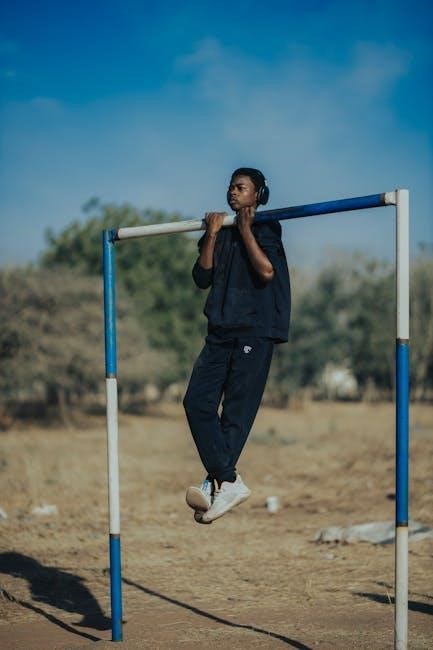
Focus on back and biceps exercises today! This pull workout builds upper body strength, utilizing movements like pull-ups and bicep curls for optimal gains.
Back Exercises
Developing a strong back is crucial for overall strength and posture. Begin with pull-ups, a challenging compound exercise, or utilize lat pulldowns as a scalable alternative for beginners. Next, incorporate barbell rows to build thickness and strength in your upper back.
Focus on controlled movements and proper form to maximize muscle activation and prevent injury. Varying your grip and rep ranges will target different areas of your back, promoting balanced development. Remember to engage your core throughout each exercise for stability.
Pull-Ups/Lat Pulldowns
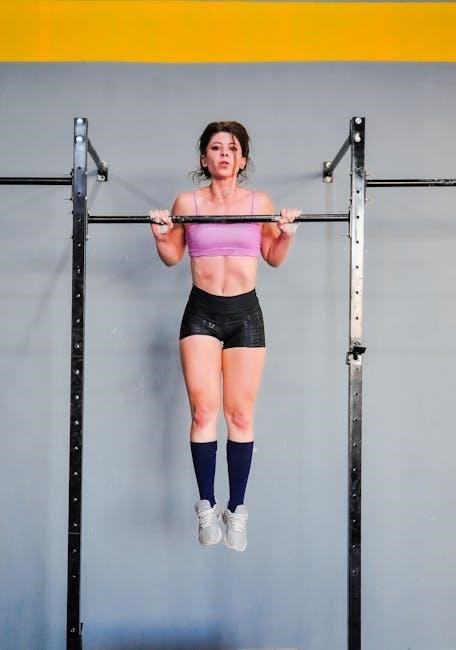
Pull-ups are a fantastic compound exercise for back development, but can be challenging. If you’re unable to perform pull-ups, lat pulldowns offer a great alternative, allowing you to adjust the weight. Aim for 3-4 sets of as many repetitions as possible (AMRAP) for pull-ups, or 8-12 reps for lat pulldowns.
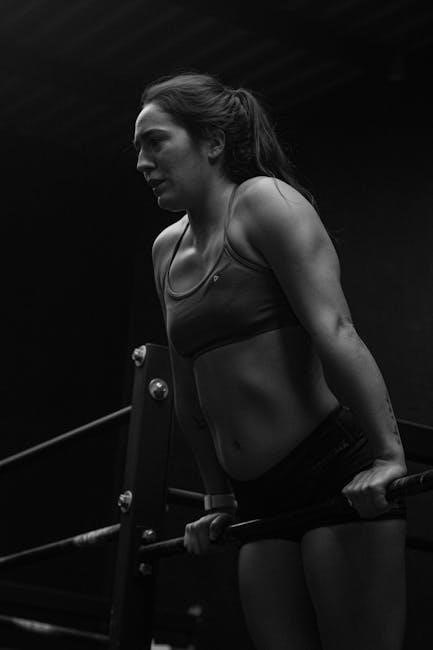
Focus on squeezing your shoulder blades together during the movement and controlling the descent. Proper form is key to maximizing effectiveness and preventing injury. Consider using assisted pull-up bands if needed.
Barbell Rows
Barbell rows are a cornerstone exercise for building a thick, strong back. Maintain a slight bend in your knees and hinge at the hips, keeping your back straight throughout the movement. Pull the barbell towards your lower abdomen, squeezing your shoulder blades together.
Perform 3-4 sets of 8-12 repetitions, focusing on controlled movements. Avoid rounding your back, as this can lead to injury. This exercise effectively targets the lats, traps, and rhomboids, contributing to overall back strength and size.
Bicep Exercises
Dedicated bicep work is crucial for developing well-rounded arm strength and aesthetics. Focus on exercises that target both the long and short heads of the biceps for complete development. Controlled form is paramount to maximize muscle activation and prevent injury.
Prioritize exercises like barbell curls and hammer curls, performing 3-4 sets of 8-12 repetitions each. Remember to avoid swinging your body to generate momentum; isolate the biceps for optimal results.
Barbell Curls
Barbell curls are a foundational exercise for building bicep mass and strength. Maintaining a stable core and controlled movement is essential. Grip the barbell slightly wider than shoulder-width apart, keeping your elbows tucked in close to your body throughout the exercise.
Focus on contracting the biceps to lift the weight, avoiding any swinging or momentum. Aim for 3-4 sets of 8-12 repetitions, progressively increasing the weight as you get stronger.
Hammer Curls
Hammer curls effectively target the biceps and brachialis, contributing to overall arm development. Hold dumbbells with a neutral grip – palms facing each other – resembling holding a hammer. Keep your elbows close to your sides and maintain a controlled motion throughout the exercise.
Focus on squeezing the biceps as you curl the weight upwards. Perform 3-4 sets of 8-12 repetitions, gradually increasing the dumbbell weight for continued progress.
Rear Delt Exercises
Strengthening the rear deltoids is crucial for balanced shoulder development and posture. Often neglected, these muscles contribute to a well-rounded physique and help prevent imbalances. Incorporating rear delt exercises into your pull day ensures comprehensive shoulder training.
Prioritize exercises like face pulls and reverse flyes, focusing on controlled movements and a full range of motion. Aim for 3-4 sets of 12-15 repetitions to effectively target these muscles.
Face Pulls
Face pulls are a fantastic exercise for targeting the rear deltoids, upper back, and improving shoulder health. Using a rope attachment on a cable machine, pull towards your face, separating the rope as you retract your scapula.
Focus on squeezing your shoulder blades together and maintaining a high elbow position throughout the movement. Perform 3-4 sets of 15-20 repetitions, emphasizing proper form over heavy weight for optimal results and injury prevention.
Day 3: Legs Workout
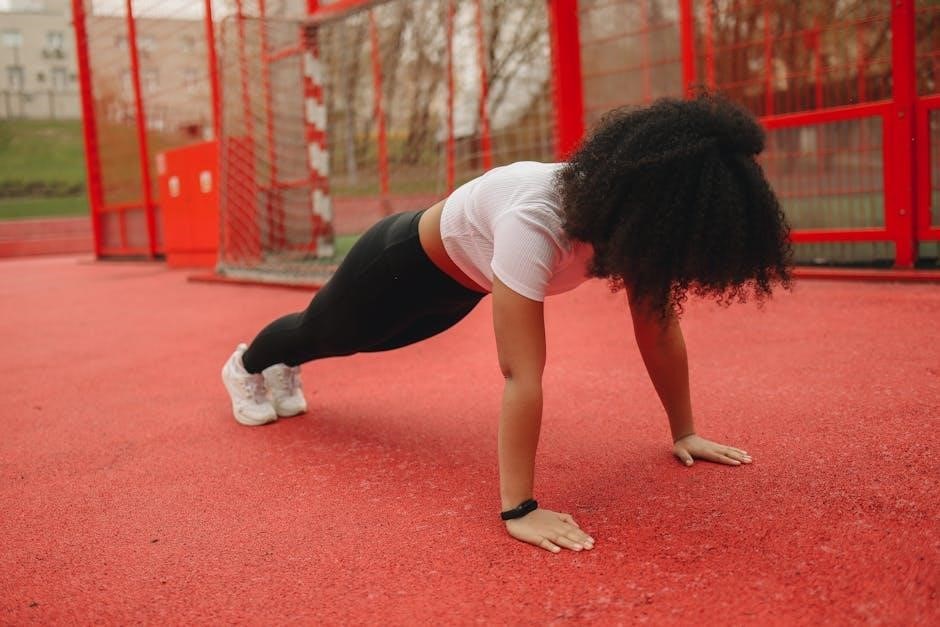
The final day focuses on lower body strength and development, incorporating exercises for quads, hamstrings, and calves for a complete leg routine.
Quadriceps Exercises
Targeting the quadriceps is crucial for leg day, building strength and size in the front of the thighs. Squats are a foundational compound movement, engaging multiple muscle groups simultaneously for maximum impact. Leg Press offers a variation, allowing for controlled resistance and focused quad activation.
Prioritize proper form to prevent injury and maximize effectiveness. Varying rep ranges and incorporating different squat variations, like front squats, can further challenge the muscles and promote growth. Remember progressive overload is key!
Squats
Squats are a cornerstone exercise for building lower body strength and muscle mass. This compound movement effectively targets the quadriceps, hamstrings, and glutes. Proper form is paramount: maintain a straight back, chest up, and descend as if sitting into a chair.
Beginners should start with bodyweight squats, gradually adding weight as strength improves. Variations like front squats or goblet squats offer different challenges. Focus on controlled movements throughout the entire range of motion for optimal results and injury prevention.
Leg Press
The leg press is an excellent alternative or supplement to squats, allowing you to load the legs with significant weight while minimizing stress on the lower back. Ensure your feet are shoulder-width apart on the platform, and maintain a slight bend in your knees throughout the movement.
Control the descent and powerfully push the weight back to the starting position. Vary foot placement to target different muscle groups – higher placement emphasizes hamstrings and glutes, while lower placement focuses on quads.
Hamstring Exercises
Strong hamstrings are crucial for balanced leg development and injury prevention. Prioritize exercises like Romanian Deadlifts (RDLs), which emphasize the hamstring stretch under load, promoting growth and flexibility. Focus on maintaining a straight back and controlled movement throughout the RDL.
Additionally, leg curls effectively isolate the hamstrings, allowing for targeted muscle building. Remember to contract the hamstrings at the peak of the movement and control the eccentric phase.
Romanian Deadlifts
Romanian Deadlifts (RDLs) are a phenomenal hamstring and glute builder. Maintain a slight bend in your knees and hinge at the hips, keeping your back straight throughout the entire movement. Lower the weight until you feel a deep stretch in your hamstrings, then powerfully contract them to return to the starting position.
Focus on controlled eccentric and concentric phases for maximum muscle engagement. RDLs improve posterior chain strength and flexibility.
Leg Curls
Leg Curls effectively isolate the hamstring muscles, contributing to balanced leg development. Utilize a leg curl machine, adjusting the pad to align with your heels. Focus on squeezing your hamstrings as you curl the weight upwards, maintaining a controlled tempo throughout the exercise.
Avoid swinging or using momentum; prioritize a strict, focused contraction. Leg curls enhance hamstring strength and definition.
Calf Exercises
Developing strong calves is crucial for overall leg aesthetics and athletic performance. Standing Calf Raises are a foundational exercise, targeting both the gastrocnemius and soleus muscles. Perform these on a calf raise machine or with dumbbells, ensuring a full range of motion.
Focus on squeezing at the top of the movement and controlling the descent. Consistent calf work builds definition and strength.
Standing Calf Raises
Standing Calf Raises effectively target both the gastrocnemius (outer calf) and soleus (inner calf) muscles. Perform 3-4 sets of 12-15 repetitions, focusing on a controlled movement. Utilize a calf raise machine or hold dumbbells for added resistance.
Ensure a full range of motion – fully extending at the top and lowering heels below the step. Prioritize a strong squeeze at the peak contraction for optimal results and muscle development.
Important Considerations
Success with a PPL routine hinges on proper warm-up, cool-down, and consistently applying progressive overload to maximize strength gains and muscle growth.
Warm-up and Cool-down
Prioritize a dynamic warm-up before each PPL session, including arm circles, leg swings, and torso twists, to increase blood flow and prepare muscles. A proper warm-up minimizes injury risk and enhances performance. Following your workout, dedicate time to static stretching, holding each stretch for 20-30 seconds.
Cool-downs aid recovery, reduce muscle soreness, and improve flexibility. Don’t skip these crucial components; they are integral to a well-rounded 3-day PPL routine.
Progressive Overload
Progressive overload is fundamental to muscle growth and strength gains within your 3-day PPL split. Consistently challenge your muscles by gradually increasing weight, repetitions, or sets over time. This forces adaptation and prevents plateaus.
Track your workouts to monitor progress and ensure you’re continually pushing your limits. Small, incremental increases are key to sustainable, long-term results. Prioritize form over weight to avoid injury.